
A product launch event is one of the highest-stakes moments in a company’s calendar. It’s the first time the world sees what you’ve been building. The product needs to speak for itself, but everything around it shapes the impression: the venue, the energy, the food, the flow of the evening.
Get it right and a launch event builds momentum that carries into sales conversations for months. Get it wrong and the catering chaos, the late setup, or the empty bar table becomes the story people remember instead of the product.
Food Mamba helps companies across the GTA, Vancouver, and Kitchener-Waterloo plan and cater product launch events end-to-end — catering, staffing, bar, entertainment, and venue sourcing all coordinated through one platform.
What Makes a Product Launch Event Different
A product launch isn’t a team lunch or a holiday party. It has a specific job to do: generate excitement, build credibility, and give attendees a story to tell after they leave.
That changes how you think about every element — including the catering.
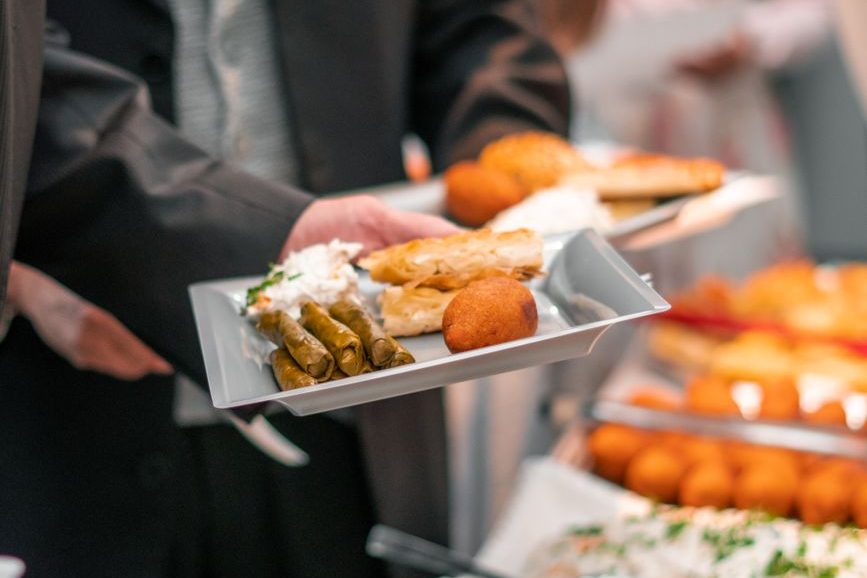
Food is atmosphere, not just fuel. At a launch event, catering sets the energy of the room. A passed appetizer reception keeps people standing, moving, and talking — which is exactly what you want at an event built around networking and conversation. A seated dinner anchors people in place, which works for a smaller, more intimate launch but limits the social dynamics of a larger one.
The bar matters more than the menu. A well-run bar keeps the event flowing and the energy up. A single bartender for 80 guests creates a bottleneck that pulls people out of conversations. Staffing the bar correctly is as important as choosing the right food.
Setup needs to be invisible. Guests should walk into a finished event — not one still being arranged. Catering that arrives while guests are walking in, or a bar that isn’t ready at doors-open, sets a tone of disorganization that’s hard to shake. Build enough setup time into every vendor booking.
The venue frames the product. A tech product launch in a polished event loft reads differently than the same launch in a hotel ballroom. The venue choice communicates something about the brand — choose one that reflects the product’s positioning, not just the one that was available.

Product Launch Event Formats That Work
Cocktail Reception (Most Common)
Passed appetizers, food stations, and a bar — guests stand, mingle, and move around the room. The most social and energy-driven format for a launch. Works for 30–300 guests and gives the room a natural flow that encourages conversation.
Best for: B2B product launches, tech announcements, startup fundraise reveals, consumer brand launches.
Seated Dinner Launch
A more intimate format for smaller, higher-stakes launch audiences — key clients, investors, press, or partners. Individually plated meals, a structured program with a keynote or demo, and a more deliberate atmosphere. Works for 20–60 guests where the relationships in the room matter more than the volume of attendees.
Best for: Enterprise product launches, investor-facing announcements, agency client reveals.
Demo Day + Catered Lunch
A daytime format combining a product demo or presentation with a catered working lunch. Common for B2B software launches, internal product rollouts, or launches targeting a professional audience. Individual group ordering works well here — each attendee pre-selects their meal, everything arrives labeled, and the session stays on schedule.
Best for: Internal product launches, B2B SaaS announcements, technical demos.
Evening Reception with Entertainment
A cocktail reception elevated with a DJ, a live performer, or themed entertainment. The entertainment sets the tone for the brand and gives the event a memorable peak moment. Best for consumer brands, gaming or entertainment products, or companies with a strong cultural identity they want to express.
Best for: Consumer brand launches, gaming announcements, fashion or lifestyle products.
How to Plan a Product Launch Event: The Key Steps
1. Define the Format and Guest List First
Before booking anything, be clear on: who is this launch for (clients, press, investors, public), what tone does the brand need to strike (polished, energetic, intimate, celebratory), and how many people are attending. These three answers determine the venue type, catering format, staffing level, and bar program.
2. Book the Venue Early
Toronto has strong event loft, rooftop, and gallery space options well-suited to product launches — but the best ones book up fast, especially in September and October when event season peaks. For launch events with a specific date tied to a product release, venue availability should be the first thing confirmed. Food Mamba’s Mamba Pro can source venues alongside catering and event coordination if you don’t have one secured.
3. Choose Your Catering Format
| Launch Format | Catering Recommendation |
|---|---|
| Cocktail reception (30–200 guests) | Passed appetizers + food stations |
| Seated dinner launch (20–60 guests) | Individual plated meals |
| Demo day + lunch | Group ordering — individual pre-selected meals |
| Evening reception with entertainment | Passed appetizers + bar + light food stations |
4. Staff the Bar Properly
A bar is not optional at an evening launch event. Plan for one bartender per 50–75 guests for a standing reception. Choose between a wine bar, cocktails package, or full bar based on the brand’s tone and the event’s energy. All bar packages are bookable through Food Mamba alongside catering in a single order.
5. Add Entertainment That Fits the Brand
Not every launch needs entertainment — but the ones that do get remembered longer. A DJ for a tech or consumer brand launch, a live acoustic performer for a professional services announcement, or themed entertainment for a bold brand reveal all create a peak moment that gives guests a story to tell.
For specific entertainment requests, contact the Food Mamba team directly.
6. Build the Timeline Working Backwards
Work backwards from doors-open. Catering and bar should be fully set up 30 minutes before guests arrive. Entertainment should be sound-checked before anyone walks in. Staff should be briefed and in position at doors-open — not still arriving. For a 7pm doors-open, that means all vendors on-site by 5:30pm at the latest.
7. Book with Enough Lead Time
- Venue: 4–6 weeks minimum, longer during peak season
- Catering and bar: 2–3 weeks
- Staffing: 2–3 weeks
- Entertainment: 3–4 weeks for popular acts
- Full-service coordination via Mamba Pro: As early as possible — see our booking lead times guide
What to Budget for a Product Launch Event
Product launch budgets vary widely depending on guest count, format, and ambition. Realistic ranges:
| Element | Typical Cost Range |
|---|---|
| Passed appetizers and food stations | $35–$60/person |
| Bar service (wine/cocktails/full bar) | $20–$35/person |
| On-site serving staff | $180–$900 depending on package |
| Entertainment | $700–$2,000+ |
| Venue rental | Varies widely by space and duration |
For a cocktail reception launch of 80 guests with catering, bar, and staffing — no venue or entertainment — budget approximately $6,000–$8,000. Add entertainment and a venue rental and that range shifts accordingly.
Food Mamba displays transparent, all-in pricing across its vendor network with no hidden fees. For a fully tailored launch event proposal, submit a Mamba Pro request.
How Food Mamba Handles Product Launch Events
Mamba Pro — The right choice for most product launch events. Share your guest count, date, format, and budget, and Mamba Pro builds a fully tailored event proposal — catering, bar, staffing, entertainment, and venue sourcing if needed — coordinated end-to-end with one invoice.
Mamba Hub — For smaller, simpler launch formats (a demo day lunch, an internal product rollout), browse vendors directly and add bar and staffing at checkout.
Group Ordering — For demo day or daytime launch formats where individual meal choice matters, group ordering lets each attendee pre-select their own meal from a shared link.
Frequently Asked Questions
What type of catering works best for a product launch event in Toronto?
A passed appetizer and food station format works best for most launch events — it keeps guests standing and moving, which drives the social energy a launch depends on. For smaller, more intimate launches (20–60 guests), individually plated meals at a seated dinner work well. For daytime demo-style launches, individual group ordering keeps the session on schedule without a buffet line.
How far in advance should I book a product launch event in Toronto?
Venue should be confirmed 4–6 weeks in advance, more during peak season (September–November). Catering, bar, and staffing should be booked 2–3 weeks out. Entertainment requires 3–4 weeks for popular acts. For full-service coordination through Mamba Pro, submit your request as early as possible to secure the best vendor availability.
How much does a product launch event cost in Toronto?
A cocktail reception launch of 80 guests with passed appetizers, bar service, and staffing typically runs $6,000–$8,000 before venue and entertainment. Per-person food costs run $35–$60, bar service runs $20–$35 per person, and staffing packages run $180–$900 depending on group size. Food Mamba displays all-in pricing with no hidden fees across its vendor network.
Can Food Mamba help source a venue for a product launch event?
Yes — venue sourcing is part of what Mamba Pro coordinates. Share your event format, guest count, and any venue requirements (rooftop, event loft, gallery space, private dining) and Mamba Pro will include venue recommendations alongside catering and event coordination in a single proposal.
Does Food Mamba handle product launch events outside Toronto?
Yes — Food Mamba coordinates product launch events across the GTA, Vancouver, and Kitchener-Waterloo. Submit a Mamba Pro request with your location and event details and the team will build a tailored proposal for your market.
Planning a product launch event in Toronto, Vancouver, or Kitchener-Waterloo? Submit a Mamba Pro request — or contact the team to discuss your event.

Leave a Reply